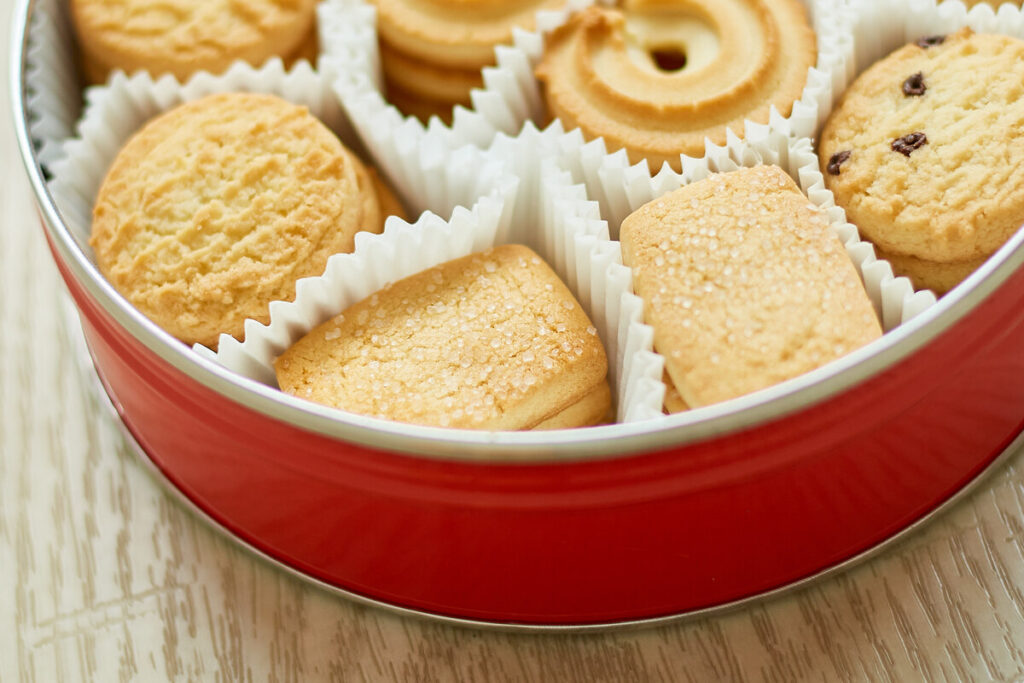
If you grew up with a cookie tin on the kitchen counter, you might remember finding a lonely slice of bread or a couple of sugar cubes tucked in with the cookies. It looked odd, but it was one of the smartest storage tricks our grandmothers had, and it still works today.
Why cookies change texture in the first place
Cookies are a dry food. Baking drives most of the water out of the dough, which leaves behind a network of starch and sugar that badly wants to pull moisture back in. That tendency has a name, hygroscopic, but you have seen it in action every time a crisp shortbread turned bendy and dull overnight.
As cookies soak up water from the air, the sugar dissolves a little and the starch softens. Even the best container lets a puff of humid air in every time someone lifts the lid. So the trick is not to seal moisture out completely. The trick is to give that moisture somewhere else to go, or to supply it on purpose when you want it.
Soft cookies: let the bread do the work
Bread holds more water than cookies do, and it gives that water up easily. Cookies, with all their sugar, are happy to grab it. Put the two together in a closed tin and the moisture moves from the bread into the cookies. That is why chewy chocolate chip or oatmeal cookies stay tender for days with a slice of bread on top, while the bread itself slowly goes stiff and dry.
Around here, that is exactly the job a heel of sandwich bread is good for once nobody wants it on a plate.
Crisp cookies: reach for sugar cubes instead
For butter cookies, biscotti, or anything that should snap, you want the opposite. Sugar is a natural moisture magnet, and each little cube can hold on to a surprising amount of water. Set one or two sugar cubes in the bottom of the tin and they quietly catch the humidity that sneaks in each time the lid comes off. A classic metal cookie tin helps too, since it is not perfectly airtight and does not trap dampness the way some plastic containers do.
What you will need
- A cookie tin or lidded container
- One slice of white sandwich bread (for soft cookies)
- Two sugar cubes (for crisp cookies)
- A few slices of fresh apple (for soft cakes like madeleines or mini loaf cakes)
How to do it
- Sort your cookies first. Keep soft and crisp cookies in separate containers so they do not trade moisture with each other.
- For soft cookies, lay a single slice of bread in the tin. One slice is enough for a small batch of about 8 to 12 cookies, so add another for a bigger batch.
- For crisp cookies, drop one or two sugar cubes into the bottom of the tin and leave out the bread entirely.
- Close the lid and check the bread every couple of days. Once it is hard and dry, it has nothing left to give, so swap in a fresh slice.
Tips and things to watch for
- White bread works better than whole wheat here because it holds more moisture to share.
- This trick extends freshness. It does not keep cookies good forever, and eventually they will go stale anyway.
- If cookies have already gone a bit hard, a slice of bread can bring them back, but it works best on cookies baked within the last two or three days. Older ones may simply be too far gone.
- Give it a few hours. The moisture exchange is slow, so do not expect a rescue in five minutes.
Other ways to use it
Soft cakes that are starting to firm up, like madeleines or little loaf cakes, respond well to a few slices of fresh apple tucked into the container. The apple releases moisture just like bread does and leaves the crumb tender again. Bread, sugar, apple: three things already sitting in most kitchens, no special gadgets required. It turns out our grandmothers understood food science a lot better than they ever let on.