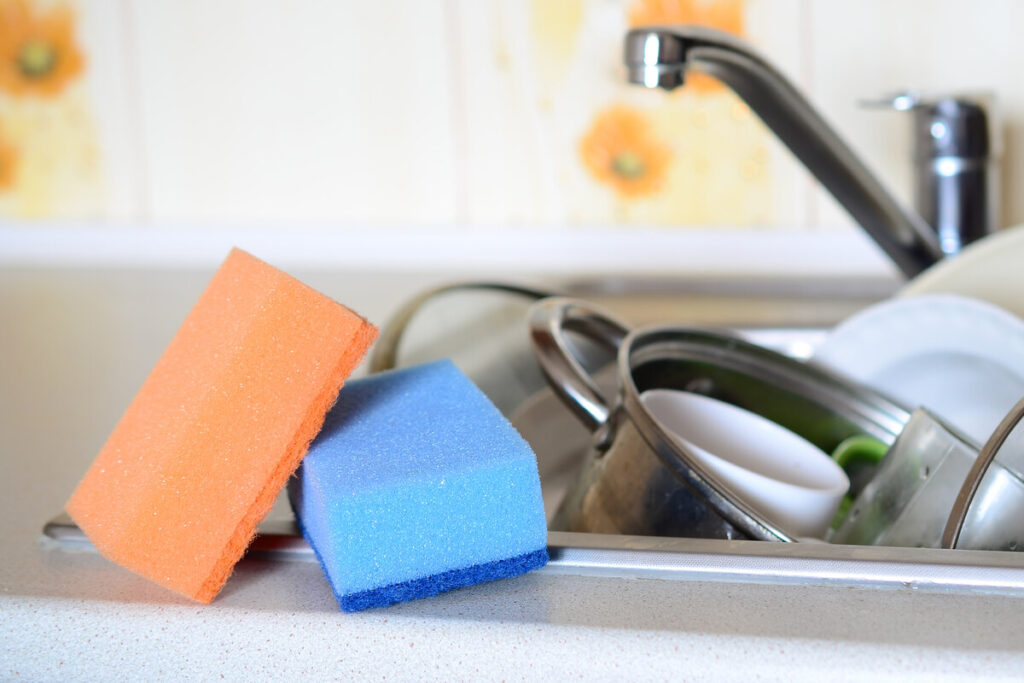
You finish the dishes, reach for the sponge, and there it is: that sour, musty smell that no amount of dish soap seems to fix. The good news is that you do not need a special cleaner to rescue it. Thirty seconds in the microwave or a simple hot salt soak, both using things already in your kitchen, will bring it right back.
Why sponges start to smell so fast
A kitchen sponge is basically built to hold water, and that is exactly what germs and mildew love. Add tiny bits of food trapped in the holes, a little puddle sitting in the sponge holder, and a corner of the sink that never quite dries, and you have the perfect place for bacteria to multiply. The smell is usually the first warning sign, and it can show up within just a few days.
Fall makes it worse. Once the weather cools off, windows stay closed, the kitchen gets less fresh air, and we tend to cook more at home. Around here, soup and casserole season means a lot more pots to scrub, so the sponge is working overtime and staying damp all day long.
Why a dirty sponge is worth taking seriously
The odor is annoying, but the bigger problem is what you cannot see. A sponge full of bacteria does not clean your counters, it spreads whatever is living in it onto your dishes, your cutting boards, your hands and eventually your food. In a kitchen that gets used several times a day, that adds up quickly. A little routine care keeps the whole space healthier without much effort.
What you will need
- Your microwave (for the fastest method)
- Or, for the soak: about 2 cups (500 ml) of very hot water
- 1 heaping tablespoon of coarse salt, like kosher salt
- A bowl big enough to fully cover the sponge
Method one: the microwave
- Rinse the sponge well and squeeze out the bits of food, but leave it soaking wet. A dry sponge can scorch or even catch fire.
- Set it on a microwave-safe plate and heat it on full power for 30 to 60 seconds.
- Stay close and keep an eye on it the whole time.
- Let it cool completely in the microwave before you touch it. It will be steaming hot.
The heat knocks out bacteria and mildew and gets rid of the smell along with them. Only do this with regular cellulose or foam sponges, never one with a metal scrubber side.
Method two: the hot salt soak
- Stir the coarse salt into the very hot water until it dissolves.
- Push the sponge under the water and let it soak for about 15 minutes.
- Rinse it really well under the tap and wring it out.
This is a handy option if you do not have a microwave or would rather not use it for cleaning. It does a nice job of loosening grime and freshening up the sponge. If yours still smells after a soak, the microwave method is the stronger fix.
Habits that keep sponges fresh longer
- Rinse the sponge after every use and squeeze out as much water as you can. Less moisture means fewer germs.
- Let it air dry standing on its edge in a dry spot, not lying flat in a wet dish or soap tray.
- Give it the microwave or salt treatment about once a week as routine maintenance.
- Swap in a new sponge every two to three weeks, and sooner if it was used to wipe up after raw meat or a cutting board.
Worth it before a busy holiday season
With fall gatherings and family dinners coming up, a clean sponge is one of those small things that quietly protects everyone at your table. If you are trying to cut down on waste, washable or natural fiber sponges work great with both of these methods and will last you a lot longer. One quick zap or a pinch of salt, and your kitchen is ready for whatever the season throws at it.